On the subway, watching a young couple together – and the young lady alone in the seat behind them, who keeps leaning forward and hugging them both. Good friends? A poly triad?
Why does it matter, really? Love is wonderful in whatever form it arrives.
The Pursuit of Yappiness
Kitty Chambliss is a up-and-roaring voice in the polyamory community, doing coaching, presenting seminars, and (perhaps most prominently) putting out the Loving Without Boundaries series of interviews with longtime poly practitioners and thinkers.
We ran across each other at this year’s Woodhull Sexual Freedom Summit, and when we discovered we lived a few blocks apart, it was almost inevitable that we would take things to the next level.
Which was this podcast (whatever were you thinking?): http://tinyurl.com/pourpoly
Sure, it’s an hour of your life. Listening to me drone on. But there may be a laugh or two, and maybe, just maybe, a usable insight.
Does Your Relationship have (4) Legs?
To be accepted by – or even friends with – one’s metamour is a wonderful thing. But when your lover’s pet finally decides that you’re OK, you’ve hit the jackpot.
Macaroni or Cheese?
Peanut butter or jelly?
Love or commitment?
Partner A or Partner B?
…it’s all better with “and.”
There is much more to come on that magical word, so keep checking back.
You Don’t Suck — Unless You Want To.
A Muslim group in Florida has recently started buying billboards that say “Hey, ISIS, you suck!” to emphasize the difference between regular Muslims and radical ones.
However much one may agree with that sentiment, it makes me uneasy. Not because of the religious part, but because of the growing use of “you suck” and “that sucks” as public, casual conversation.
“You suck” started as a anti-homosexual slur. It was used against men to imply that they gladly engaged in oral sex with other men, which was seen as unmanly and somehow wrong. After dropping the object of the phrase, the thing that was sucked, it came into more general circulation meaning something substandard.
I’ve never liked it, and I will not use it. But I hope that others who care about the meaning of words will avoid it also.
Proofreading is Important
When you dictate “Yours with no small amount of yearning,”
and what gets transcribed is “Yours was no small amount of urine.”
#thanksSiri
Life-blessing, wall-destroying, heart-changing…
“Listen . . . listen to what this world is telling you, for it is calling for your love, your rage, your beauty, your sex, your energy, your rebellion . . . because it needs YOU in order to remake itself. In order to be reborn into something else, something maybe better, more godly, more wonderful, it needs US.”
This new world is a world of black and white. A place of freedom where the two most culturally powerful tribes in American society find common ground, pleasure and joy in each other’s presence. Where they use a common language to speak with . . . to BE with one another.
A “human being” proposed this, helped bring it to pass, a “boy,” a nobody, a national disgrace, a joke, a gimmick, a clown, a magician, a guitar man, a prophet, a visionary? Visionaries are a dime a dozen . . . This was a man who didn’t see it coming . . . he WAS it coming, and without him, white America, you would not look or act or think the way you do.
A precursor of vast cultural change, a new kind of man, of modern human, blurring racial lines and gender lines and having . . . FUN! . . . FUN! . . . the real kind. The life-blessing, wall-destroying, heart-changing, mind-opening bliss of a freer, more liberated existence. FUN . . . it is waiting for you, Mr. and Mrs. Everyday American, and guess what? It is your birthright.”
— Bruce Springsteen, in his autobiography “Born to Run,” on Elvis. But speaking to a way of living to which we can all aspire, no?
How will you claim your birthright today?
As time goes by…
After a certain age, all dating is carbon dating.
Entree Nous
I was recently introduced to the president of the LGBT employees’ organization in my workplace. I thought we hit it off well, but was still surprised when I saw him today in the employee cafeteria and thought he was making an rather forward proposal.
Turns out if he was asking if I liked pho.
Team Gilda or Team Karen?
This is another special guest post by Beverly Diehl. A writer, practitioner of solo poly, and breast cancer ass-kicker, Beverly is actively involved in Sex-Positive World. She blogs about all these topics and more at http://blog.writinginflow.com.
In the wake of Gene Wilder’s death this week, an interesting thing is happening on the Interwebs.
Most of us were aware of Mr. Wilder’s marriage to brilliant, beautiful comedian Gilda Radner, cut short by her death of ovarian cancer. Less aware of his two previous marriages, to Mary Mercier and Mary Joan Schutz. Or of the love he left upon his death, Karen Webb Boyer, to whom he’d been married for 25 years.
People wrote and talked of how he and Gilda could “be together again” now. Others talked about how hurtful and disrespectful such an expression could be to his widow, Karen. As if we all had to choose teams, Team Gilda, or Team Karen, because in the afterlife, There Can Be Only One (Love).
Why? Why isn’t it entirely possible, that even as Gene found new love with Karen, he continued to love and mourn Gilda? And perhaps even his previous two wives? Why do we assume the heart – or the afterlife equivalent thereof – is only big enough for one romantic love at a time?
We don’t assume this about any other relationship. Beloved pets, grandparents, siblings, parents, children, dear friends… When we imagine Heaven, don’t we imagine all our loved ones will be there? Would it even be Heaven if we had to choose: one child, one pet, one parent, one romantic love? One musician or rock band? And only one?
I know many who still love Elvis, even though he left the building a long time ago. And they went on to love other musical acts.
As someone who practices polyamory, the idea of Only One – even in this life – seems silly. There have been times in my life when I’ve had no current loves. Other times, several simultaneously. Yes, it’s more complicated. Of course, time and financial resources are a finite commodity, whether we are talking about children or romantic interests or cats.
But love? Does anyone truly believe that Gene’s love for Gilda cut off like a spigot when he met Karen? Or did she accommodate and make room for it (as perhaps he did for her past loves), secure in the knowledge he loved her just as much, if differently? They moved into the house he shared with Gilda, she must have come to some peace with that very public relationship.
I’ve found my love doesn’t shut off like a spigot, even when I was trying and failing at monogamy. I could make myself conform to society’s norms – only one penis granted access to my genitals for a set period of time. But my heart loves who it loves, when it chooses to love them, regardless of sexual activity. I’ve continued to have feels for men with whom I am no longer sexually involved, sometimes for decades.
I think, I hope, that this sad event [full disclosure, I had a huge ladyboner for Gene Wilder before I even knew what a ladyboner was] will spur people to contemplating more about the limitless nature of love. Perhaps to understand those of us who identify as polyamorous a little better.
We’re not so different from Gene & Gilda, or Gene & Karen. We simply don’t require our loves to be divorced from us or dead, before acknowledging that a new love has entered our loves. Without taking anything away from the love that already existed. We have learned, are still learning, to share heart space.
Living a polyamorous life can be challenging. There can be jealousy to be worked through (please note, there’s plenty of evidence that monogamy does not magically cure jealousy), conflicting desires, and complicated schedules.
But life is short. Let’s all acknowledge the love we have in our lives.
Sex Sells, but Marketing Matters
Last year at the Woodhull Sexual Freedom Summit, I gave a presentation on how to woo recalcitrant legislators to your cause when they don’t like or understand it. Called it “Taking the Hill.” Got a few folks.
Gave the same talk this year. Hung out a sign titling the course, “Making Congress Your Bitch.” Got more than twice as many.
Gotta love those kinky sex-positive folks. (And all the rest of them, too.)
Is True Marriage Equality Easier Than We Think?
Marriage is a sacrament. A holy union. The basis of the nuclear family…
…to the church.
But strip away the religious trappings, and what is marriage? It is an agreement made between people to provide benefits, designate succession and legal powers, and declare responsibility for offspring. So, to government and civil authorities, marriage is, quite simply, a contract.
But in law, marriage is rarely treated like other contracts. It is generally considered as part of “family law” rather than contract law, not only written into different code sections but often with different courts to decide on its implementation.
What would happen if marriage contracts were considered like other contracts? Simply, it would solve a lot of problems with the institution of marriage.
As long as the parties to a contract are of legal age, there is no restriction on which
- genders
- ages
- orientations
- religions
- or races
of people can enter into a contract.
There is also no restriction on how many parties may be part of a contract.
Contracts can be revised over time to take into account new circumstances, which could help address and streamline divorce – or in some cases even avoid it entirely.
In this construct, government doesn’t have to jump (or be dragged) through hoops deciding who is eligible to marry; all you have to be is of legal age and mentally competent to enter into a contract. So a lot of perceived or real “moral crises” about who can marry just fall away.
And this view of marriage is an adjunct to, not a replacement for, the traditional kind. If you want to acknowledge certain religious strictures or practices, they can be written into the contract for your marriage — without becoming part of the contract of everyone’s.
So long as we think of contracts as “family law,” marriage contracts will be burdened with requirements, restrictions, and expectations that do not adhere to any other contract. Seeing marriage as what it actually is, however, can result in a simpler system for everyone. It’s not the end — but it might be a pretty good beginning.
Bringing Home Takeout
Today’s question: I recently started my first relationship outside my marriage, and it’s going very well. Here’s the odd thing: Things with my spouse have gotten hotter and more intense at the same time! After all these years, why would there be new relationship energy in my marriage?
You may be having new relationship energy because your relationship *is* new. The rules of your marriage have changed. There are new facets and new experiences and new things to talk about. You’re discovering things about yourself through your interactions with your new partner, and being seen through new eyes. And your spouse is being reminded of what a loving and appealing person you are, not to mention that glow one gets from a fresh relationship. With all that, how could your existing relationship not change?
And how wonderful that your spouse is feeling it too. You get two new relationships for the price of one! Especially when polyamory is new to an existing relationship, some people find the transition tricky to manage or even threatening. I’m delighted to hear it works so well for all of you!
You’re learning something that’s inherent to polyamory: It’s common for lessons learned in one relationship to inform and brighten others. That’s just one of the good parts. So, congratulations and enjoy!
Test. Then Talk.
One of the more encouraging developments as open discussion of sex has become more normalized in North American culture (and yes, there’s still quite a way to go) is that it is both easier and more expected to exchange information about sexual safety. For modern swingers and other polyamorists, as well as those engaging in casual, formal, or business-suit sex, openness about boundaries and one’s health status is not only standard but expected, and increasingly received without judgement — especially as facts become more widely known regarding both the prevalence and lack of severity of some STIs. (Unless you are immunocompromised, herpes, for example, is just a skin condition with a bad PR agent.)
Getting information about a partner’s health is just the beginning, though. After all, it’s up to you to decide what someone else’s health and boundaries mean for your practices together. And some partners, having been open and vulnerable by expressing their status, can find it upsetting when those statuses take certain activities off the board – even if they’re giving you full credit for looking after your joint safety.
My partners and I span a range of STI statuses, and our practices differ depending on who we’re with as necessary to keep anyone from receiving anything they don’t want. That takes work — and skills. In addition to regular testing, the essentials include:
- Open communication about potentially awkward subjects;
- A non-judgmental acceptance of others’ statuses (which assists the communication);
- A dedication to take care of your own health independent of what anyone else does, and
- A willingness to accept that some things may not happen with a particular partner (including, of course, their reciprocal understanding that some things may not happen with you.)
In my experience, it’s the last point that’s hardest. Some people seem to feel that if you stay away from certain activities, you’re adding to stigma. Those can be challenging conversations, particularly in multi-partner situations, when knowing that a partner will engage in some activities with their other partners that they won’t with you can add to jealousy and potentially resentment.
Deep breaths, abundant understanding, and gratitude for what is on the table rather than resentment for what isn’t go into the safer sex kits right next to the condoms, gloves, and dental dams. The good news is, one size fits all.
Does Virtual Presence = Actual Absence?
It’s no secret that when keeping multiple relationships alive, time can be at a premium. Even the most ardent lover cannot be in in two places at once. For many, modern technology — particularly the ability to communicate 24/7 through devices we can carry on our person — helps to resolve some of the issues the clock poses by letting us be virtually present with partners, even if we can’t actually proffer a hug in person.
Some of my relationships have worked this way for a long time. Which is why it came as a surprise when someone I have considered a romantic partner for years, albeit a long-distance one, recently expressed the idea that to her, I was just a “lover” — by which she meant an occasional physical partner and little more. To her, maintaining a heart connection required more frequent in-person visits than we have been able to sustain.
Why was this a surprise? Simply put, my experience has been that correspondence can keep someone very present and warm in my heart. Yet it clearly didn’t work that way for her. So my partner’s declaration caused me to wonder whether I had just been fooling myself for a good while.
As if having overheard, three days later, the relationship writer Ferrett Steinmetz published a disquisition on that very topic. It turns out that his way of conducting long-distance relationships, and the rewards he derives, are analogous to mine. His piece is well worth reading, here. The short version is that texting and other forms of communication mean that one person is thinking of another, and can be an adequate substitute for presence — with some partners. He went on to say that if that wasn’t what the other person wanted, then they just weren’t a good partner for him. But please read it in his words. I’ll wait…
Okay. Got it? Do you agree with him? Or do you agree with another friend of mine, who took issue with Ferrett’s (and, by implication, my) worldview: “To me the whole point of dating is physical company and sex. If I am not getting physical touch and in person conversation the person isn’t a boyfriend. Even if I had a regular boyfriend, I wouldn’t call a second relationship a boyfriend unless I actually saw him in person once a month. I guess I don’t know what you get out of texting 4 women each day with rare visits?”
In a way, she may be further affirming the idea popularly expressed in Gary Chapman’s The Five Love Languages that for some people, “quality time” and “physical touch” are the most significant aspects of a relationship, while for people like Ferrett and me, other expressions of affection can provide the nourishment and continuity that lets relationships thrive.
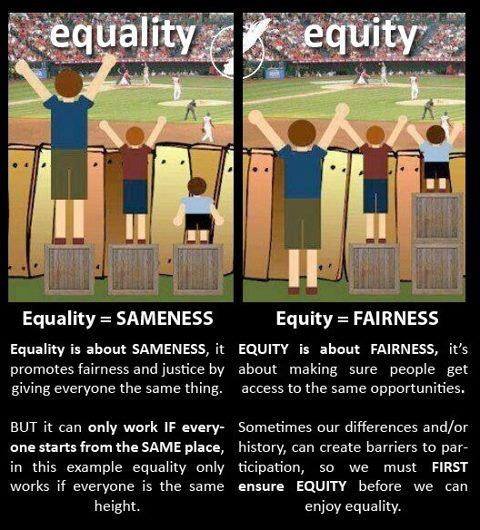
The upshot of that seems to be that understanding the personal chemistry of a relationship is not enough, nor is simple frequency of contact sufficient to keep a relationship charged. Understanding how someone wants to communicate and to sustain is essential — as is recognizing when the amount of face time available for a given relationship is a threat to its continued function, irrespective of the history or depth of feeling. Some partners just need more time than others, and for them to feel that they are being treated equitably requires that they not be treated equally, at least in this aspect of the relationship. (For more on this, see Beverly Diehl’s guest post here.)
No, nobody ever said poly was easy. But treating people as they wish to be treated can be a good start. For Ferrett, whether someone shares his way of communicating is part of determining their suitability as a partner. For me, hearing that a partner and I have different preferences forces a decision about how to reconcile their needs with my availability. For some, presence is a present; but for others, it is a basic need.
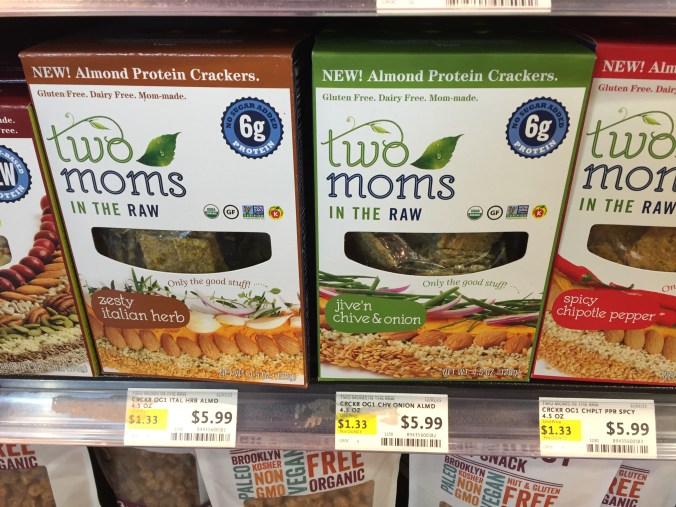
Today, on “Snack or Pornographic Fantasy?”
What Price Polyamory?
Well, after 28 years of polyamory, I have discovered a significant issue that challenges my entire belief in the practice.
Last weekend, I consolidated all of the books in “to be read” piles scattered around the house into a single central location. The result was three stacks of books each 3 feet high.
I asked myself, “But I love reading! What have I been doing with my life rather than reading all these books?” The answer was obvious: “Having joyous human relationships.”
But… the reading! The people! The reading! How to reconcile these needs? Is it goodbye to polyamory, abandoned for the Joy of Lex?
Then an answer occurred to me: I will propose to my partners a series of Cuddle and Read days. Between the covers, between the covers. Satisfying heart, mind, and soul. We’ll see who bites!
Re: Couples’ Privilege
This special guest post on an issue in polyamory is by Beverly Diehl. A writer, practitioner of solo poly, and breast cancer ass-kicker, Beverly is actively involved in Sex-Positive World. She blogs about all these topics and more at http://blog.writinginflow.com.
Sometimes married or partnered people can be upset at the idea your partner’s new love interest is getting “all the good times” with them, while all you get is duties and drudgery. You want to measure out the fun times to make sure it is fair. If the new partner gets a 4-hour date during the week, the existing partner should get a 4-hour weeknight date, and so on.
I’d like to invite those who feel that way to consider another angle.
Relationship building and bonding is hard work and takes time. It ain’t all Disneyland and hot sex (or hot sex AT Disneyland, my personal preference). It’s a thousand shared moments, and sometimes the worst of them: cleaning up pet or kid vomit; waiting for the tow truck in blistering heat; having to call the cops on the obnoxious neighbor, become treasured stories we laugh and joke about later.
When we enter your existing relationship, either as a partner to one of you, or as part of a triad – the existing partners almost always have a such huge head start on shared memories and events, we are never going to catch up. If we don’t live with you, yes, we don’t have to deal with the ants in the breakfast cereal or your broken washing machine, but we also don’t usually get a hug at the end of a rough day at work. We usually have to deal with our OWN household crises, without help. We don’t get to roll our eyes together at political commercials, or all the many daily touches, shared glances, conversation and more that you may be excluding, when you say your partner hardly spends any time with you. (I know, I know, depending on whether you practice Kitchen Table Poly, this may not be true for the way YOU poly.)
It’s intimidating, starting a relationship with someone who has been partnered for XX years. While cowboys and cowgirls who want to “rope one off from the herd” exist, I suspect most of us “outsiders” are more nervous about being kicked to the curb. Judged as “too” something – too needy, too sexy/pretty, too threatening in some way to the existing coupled unit. It’s a challenge to be authentic and honest about our fears and concerns; we don’t want to come off like Debbie Downer (at least, I don’t), but knowing at the same time, if we don’t communicate openly about ALL the feels, if our relationship is built entirely on happy fluffy moments and NRE (New Relationship Energy), it’s unlikely to last.
It takes a lot of courage to live a polyamorous life, and I appreciate that couples, especially couples who have to be closeted for professional or family reason, are risking a lot by inviting us into their lives and hearts. Just please consider that for those of us who become involved with a partnered person, or a couple, it is a huge emotional risk for us as well. Maybe even a greater one, because if our relationship with you fails, you still have each other, and we may or may not have other partners. Trying to figure out an exact “fair share” of time or events is unlikely to pay off the way anyone thinks it will.
Sex Without Love. Really?
“You don’t have to fall in love with everyone you have sex with. Really.” — a former lover
I consider myself demisexual, in that I really don’t enjoy transactional sex without some deeper connection. (Okay, it can be enjoyable, but not nearly as much as the other kind.)
Touch is always welcome and does not require the same level of connection as sex to be rewarding. (I have thus managed to avoid marrying all my massage therapists.) It’s when things get more intimate and likely 1-on-1 that connection really matters.
But too often, I have confused connection and commitment, thinking that if we played together even once, there must henceforth be an ongoing relationship. Even now, with virginity more than three decades in the rearview mirror, internalizing the notion of a middle ground will take work.
In a way, it gets to that old devil oxytocin. That rush comes on, and we are wired to think that Aha! This is love! And, societally, love requires commitment, devotion, the writing of ballads. Changing one’s life utterly can be a high price to pay for a small chemical spill.
I Gave My Former Spouse Mouth-to-Mouth
It was exaspirating.
 Votreplaisir